

Last update images today Denmarks Physical Map: Explore The Landscape
Denmark's Physical Map: Explore the Landscape
Denmark, a Scandinavian nation renowned for its design, history, and happiness, also possesses a fascinating physical landscape. Understanding Denmark's physical map reveals a tapestry of low-lying plains, islands, and coastlines shaped by glacial activity and the relentless influence of the sea. This week, let's delve into the geographical features that define this beautiful country.
Understanding the Denmark Physical Map: An Overview
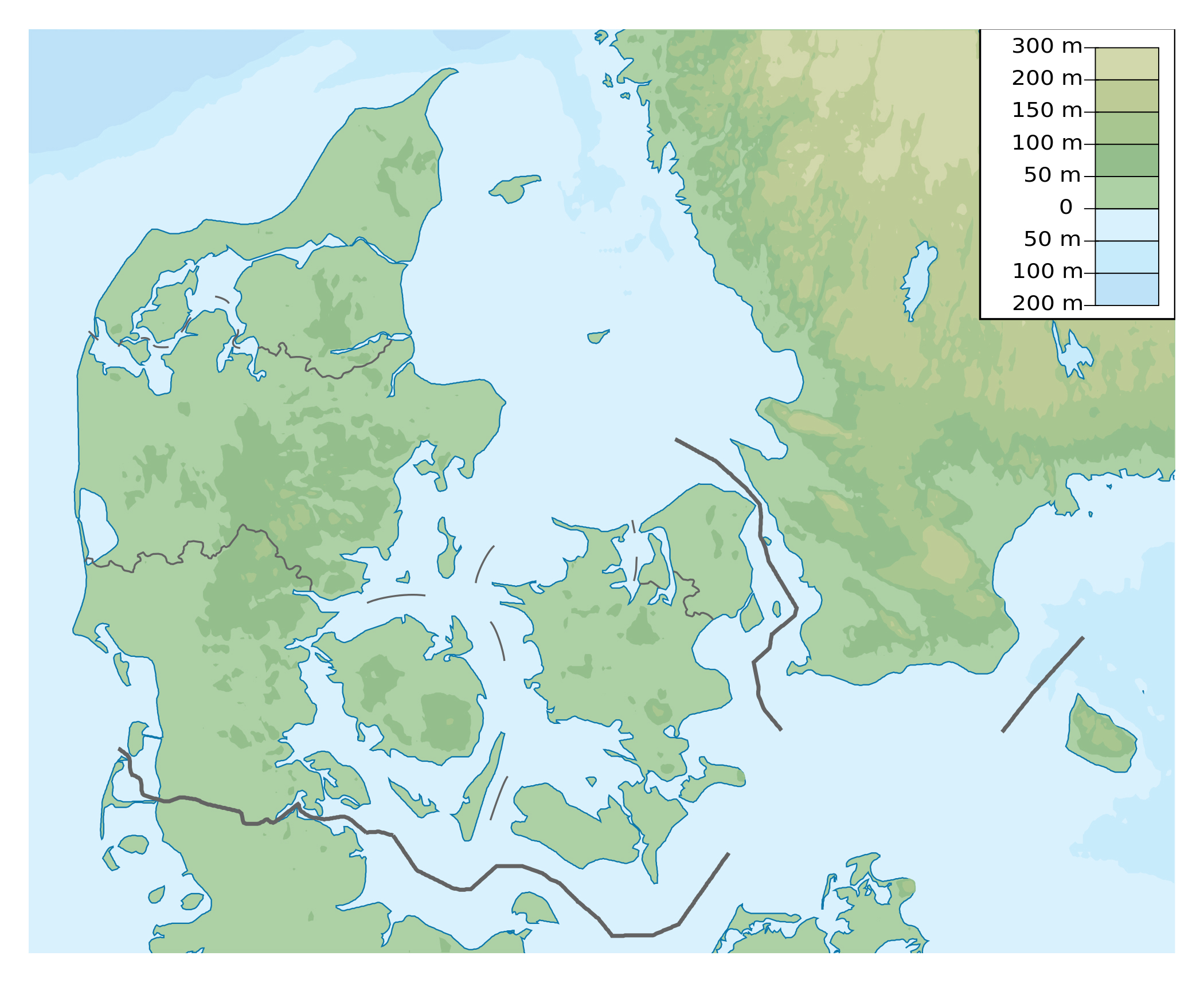
Denmark's physical map is characterized by its relatively low elevation. The country consists primarily of the Jutland Peninsula and over 400 islands, many of which are uninhabited. This fragmented geography profoundly impacts the country's climate, agriculture, and infrastructure. Exploring the Denmark physical map will show you that the highest point in Denmark is M?lleh?j, standing at a modest 170.86 meters (560.5 feet). This indicates the predominantly flat terrain.
 *Caption: A topographic map of Denmark, illustrating its low elevation and varied terrain.*
Jutland Peninsula and the Denmark Physical Map
The Jutland Peninsula forms the mainland of Denmark and shares a border with Germany. The physical map of Jutland shows a landscape shaped by glacial deposits from the last Ice Age. This has resulted in rolling hills, sandy heathlands, and fertile plains ideal for agriculture. The western coast of Jutland faces the North Sea and is characterized by long, sandy beaches, dunes, and lagoons. This area is highly susceptible to coastal erosion and flooding.
 *Caption: A physical map detailing the landforms, water bodies, and geographical features of Denmark.*
The Danish Archipelago and the Denmark Physical Map
East of Jutland lies the Danish Archipelago, a collection of islands separated by narrow straits and waterways. These islands, including Zealand (Sjaelland), Funen (Fyn), and Lolland, exhibit diverse landscapes ranging from fertile farmlands to coastal cliffs. The Great Belt Bridge, connecting Zealand and Funen, is a remarkable feat of engineering and vital infrastructure for the country.
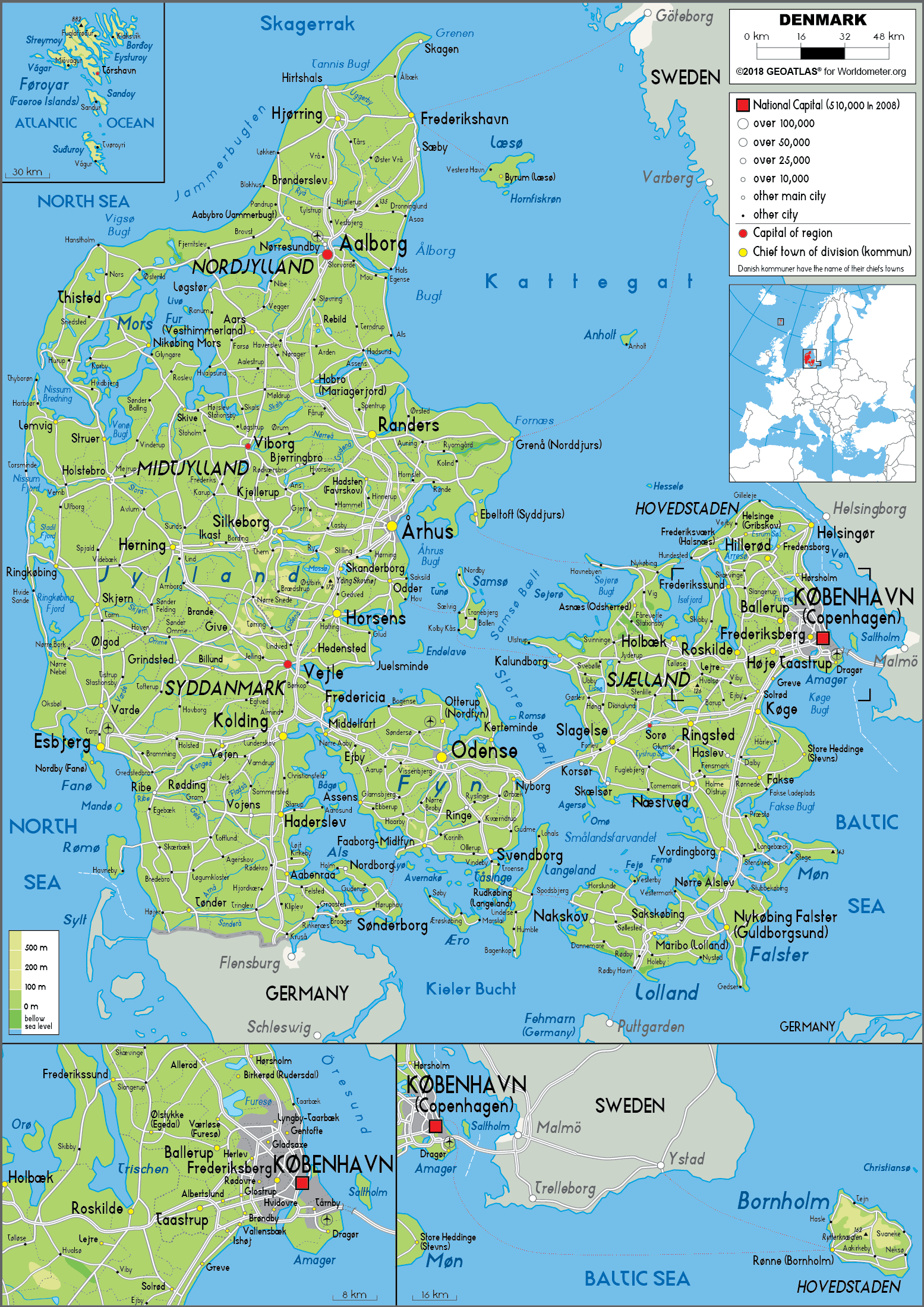 *Caption: Another physical map highlighting the distribution of islands within Denmark.*
Coastal Features and the Denmark Physical Map
Denmark's extensive coastline is one of its defining features. The Denmark physical map reveals a complex network of fjords, bays, and inlets that provide natural harbors and scenic beauty. Coastal erosion is a significant concern, particularly along the exposed western coast of Jutland, where strong winds and waves constantly reshape the landscape. To combat erosion, Denmark employs various coastal management strategies, including dune stabilization and the construction of seawalls.
 *Caption: Satellite imagery displaying Denmark's extensive and varied coastline.*
Impact of Glaciation on the Denmark Physical Map
The Denmark physical map we see today is largely a product of past glacial activity. During the Ice Age, glaciers covered much of Denmark, leaving behind deposits of sand, gravel, and clay. These deposits have shaped the land, creating fertile soils in some areas and sandy, infertile soils in others. The melting glaciers also carved out valleys and fjords, contributing to the country's diverse coastal landscape.
 *Caption: Illustration of how Quaternary glaciations shaped Denmark's topography.*
Waterways and the Denmark Physical Map
Denmark is interlaced with numerous rivers, streams, and lakes, contributing to its rich biodiversity and providing valuable resources. Guden?, Denmark's longest river, flows through Jutland and empties into the Randers Fjord. These waterways are essential for transportation, irrigation, and recreation. The Limfjord, a shallow body of water separating the northern part of Jutland from the mainland, is another significant geographical feature.
Denmark Physical Map and Agriculture
The fertile plains found throughout Denmark, especially on islands like Funen and Zealand, support a thriving agricultural sector. The flat terrain and moderate climate are conducive to growing crops such as barley, wheat, and sugar beets. Dairy farming is also a significant part of the Danish economy. Understanding the Denmark physical map helps explain the distribution of agricultural activities across the country.
 *Caption: A chart depicting agricultural land use in Denmark, highlighting the significance of farmland.*
Denmark Physical Map: Climate and Environment
Denmark experiences a temperate climate influenced by its proximity to the sea. The Gulf Stream moderates temperatures, resulting in relatively mild winters and cool summers. Rainfall is distributed throughout the year. Understanding the Denmark physical map allows us to appreciate how geographical features influence local climate patterns and environmental conditions.
 *Caption: A K?ppen climate classification map showing the climate zones in Denmark.*
Challenges and Conservation on the Denmark Physical Map
Despite its natural beauty, Denmark faces environmental challenges such as sea-level rise, coastal erosion, and water pollution. The low-lying nature of much of the country makes it particularly vulnerable to the impacts of climate change. Denmark is actively working to address these challenges through sustainable development policies and conservation efforts. These includes protecting vulnerable ecosystems and reducing carbon emissions.
 *Caption: Illustration of sea level risk in Denmark*
Who is Mads Mikkelsen?
Mads Dittmann Mikkelsen, born on November 22, 1965, is a celebrated Danish actor. He rose to prominence in Denmark with roles in the Pusher film trilogy (1996-2005) and the television series Rejseholdet (2000-2004). Mikkelsen gained international recognition for his roles as Le Chiffre in the James Bond film Casino Royale (2006), Hannibal Lecter in the television series Hannibal (2013-2015), and Kaecilius in the Marvel Cinematic Universe film Doctor Strange (2016). He's known for his intense performances and distinctive features.
Denmark Physical Map: In Summary
Denmark's physical map tells a story of glacial landscapes, coastal plains, and a resilient nation adapting to the challenges of its environment. From the rolling hills of Jutland to the scenic islands of the archipelago, Denmark's geography is both beautiful and vital to understanding its culture, economy, and future.
Keywords: Denmark, Physical Map, Jutland, Islands, Coastline, Glaciation, Climate Change, Geography, Scandinavia, Mads Mikkelsen.
Summary Question and Answer:
Q: What are the main characteristics of Denmark's physical map? A: Denmark's physical map is characterized by low elevation, the Jutland Peninsula, a large archipelago, extensive coastlines, and features shaped by glacial activity.